
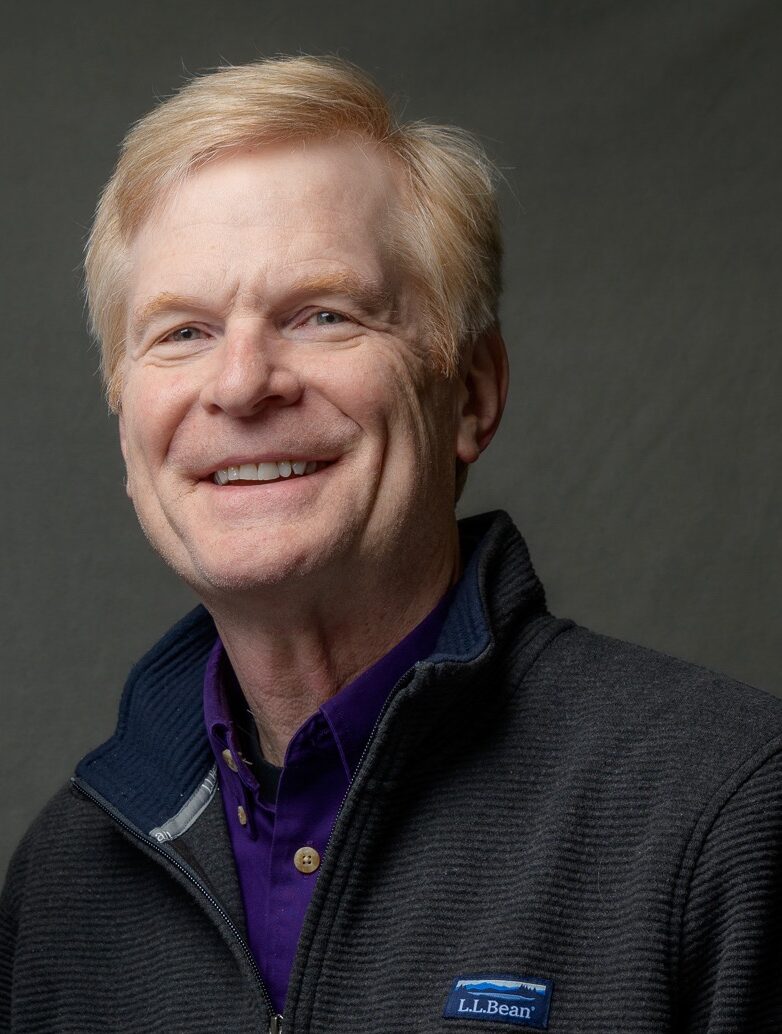
Biosketch
Christopher A. Walsh is Bullard Professor of Pediatrics and Neurology at Harvard Medical School, Chief of Genetics and Genomics at Boston Children’s Hospital, and a Howard Hughes Medical Institute Investigator, recognized for his work on genes and mechanisms underlying the development of the human cerebral cortex. He directs the Allen Discovery Center for Human Brain Evolution. His work has been recognized by election to the American Academy of Arts and Sciences, the Association of American Physicians, the National Academy of Medicine, and the Norwegian Academy of Science and Letters. He has received the Kavli Prize, the Gruber Prize, the UNC-Perl Neuroscience Prize, and awards for outstanding research from the American Academy of Neurology, the American Epilepsy Society, the American Neurological Association, and the NINDS. He is former Director of the Harvard-MIT MD-PhD training program and former member of the National Advisory Mental Health Council, and presently serves on advisory boards to the Institut Imagine and Bioskryb Genomics, among others.
Dr. Walsh studied chemistry at Bucknell University, and completed MD and PhD degrees (Neurobiology) at the University of Chicago. Following Neurology residency at Massachusetts General Hospital and postdoctoral training in Genetics at Harvard Medical School, he joined the Neurology Department at Beth Israel Deaconess Medical Center in 1993. In 2005 he became Chief of the Division of Genetics and Genomics at Boston Children’s Hospital, dedicated to improving the lives of children with with rare genetic diseases.
Research Interests
Dr. Walsh has led world-wide collaborations to identify dozens of genes essential for human brain development, associated with autism spectrum disorders (ASD), intellectual disability, seizures, and other conditions when mutated. He has used this genetics to enlighten the basic biology of neural stem cell proliferation and neuronal migration during human brain development. He discovered that a few disease-associated genes required for normal human cortical development were important targets of the evolutionary processes that shaped the unique aspects of human brain, leading him to found the Allen Discovery Center for Human Brain Evolution in 2017.
His pioneering methods to sequence genomes of single cells from post-mortem human brain have revealed an unsuspected universe of somatic mosaicism within each of us, so that no two brain cells contain the same genome. He showed that somatic mutations, present in some but not all cells, occur with each cell division during development, creating a permanent map of the unique development of every human brain. Damaging somatic mutations occurring during this development create clonal disorders underlying important forms of focal epilepsy and ASD in children, and temporal lobe epilepsy, schizophrenia, and neurodegenerative disorders in adults. He also showed that private somatic mutations—unique to a single cell--accumulate with age in neurons, even though neurons do not divide. These age-related mutations accumulate more rapidly, and in specific patterns implicating disease mechanisms, in diverse neurodegenerative conditions.
Membership Type
Member
Election Year
2018
Primary Section
Section 24: Cellular and Molecular Neuroscience
Secondary Section
Section 26: Genetics