
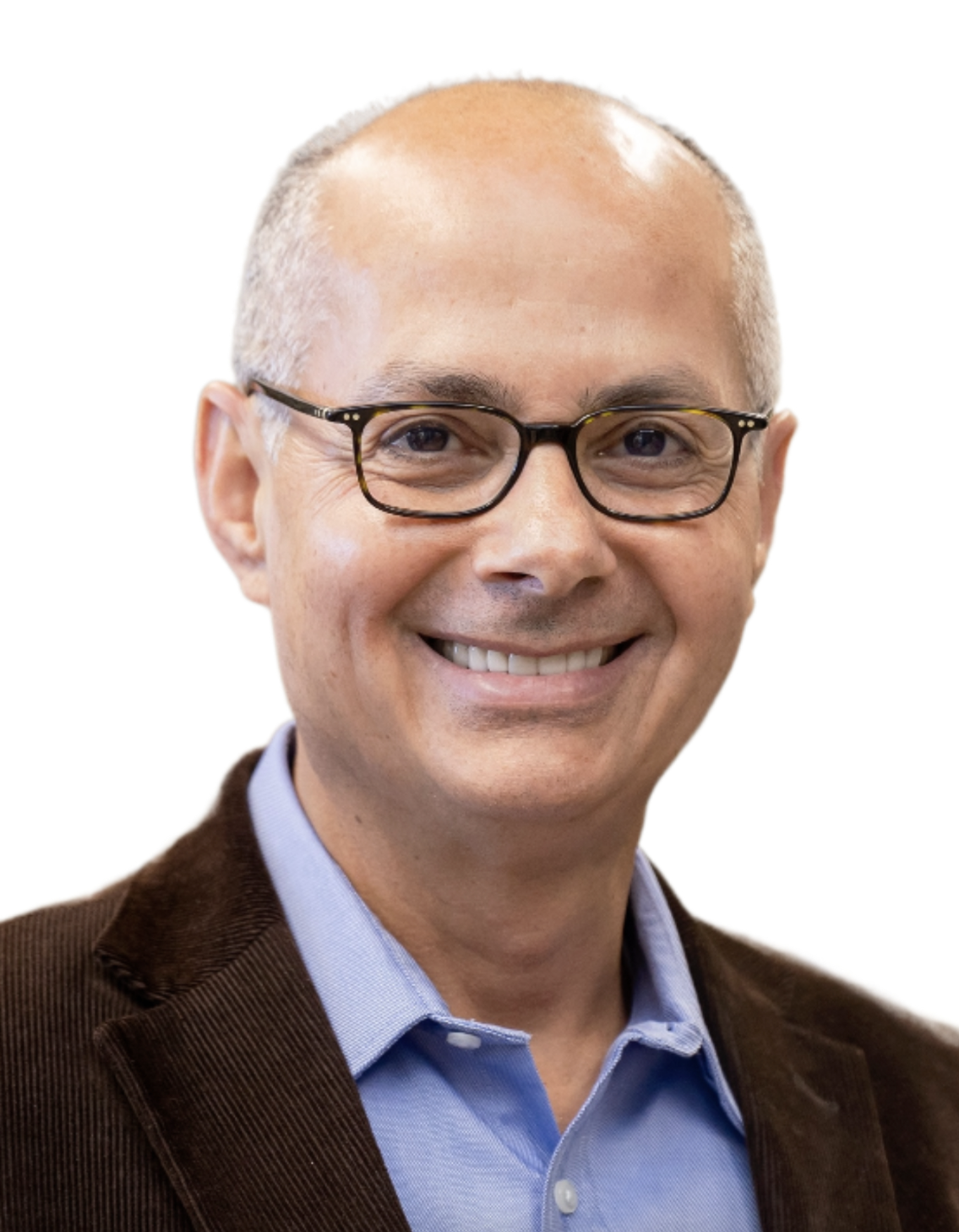
Biosketch
Omar M. Yaghi is the highest ranked University Professor and also the James and Neeltje Tretter Professor of Chemistry at University of California, Berkeley. He is the Founding Director of the Berkeley Global Science Institute. He is also the Co-Director of the Kavli Energy NanoSciences Institute (Kavli ENSI), the California Research Alliance by BASF (CARA), as well as the Bakar Institute of Digital Materials for the Planet (BIDMaP). Yaghi is an elected member of the U.S. National Academy of Sciences and the German National Academy of Sciences Leopoldina. He has also been honored with many awards, including the Sacconi Medal of the Italian Chemical Society (2004), Materials Research Society Medal (2007), American Chemical Society Award in the Chemistry of Materials (2009), Royal Society of Chemistry Centenary Prize (2010), King Faisal International Prize in Science (2015), Albert Einstein World Award of Science (2017), BBVA Foundation Frontiers of Knowledge Award in Basic Sciences (2017), Wolf Prize in Chemistry (2018), Eni Award for Excellence in Energy (2018), Gregori Aminoff Prize by the Royal Swedish Academy of Sciences (2019), August-Wilhelm-von-Hofmann-Denkmünze of the German Chemical Society (2020), Royal Society of Chemistry Sustainable Water Award (2020), VinFuture Prize (2021), Wilhelm Exner Medal (2023), Solvay Prize (2024), Tang Prize (2024), Balzan Prize (2024), IUPAC-Soong Prize for Sustainable Chemistry (2025), MRS Von Hippel Award (2025), and Nobel Prize in Chemistry (2025).
Research Interests
Yaghi's work encompasses the synthesis, structure and properties of inorganic and organic compounds and the design and construction of new crystalline materials. He is widely known for pioneering several extensive classes of new materials: Metal-Organic Frameworks (MOFs), Covalent Organic Frameworks (COFs), and Zeolitic Imidazolate Frameworks (ZIFs). These materials have the highest surface areas known to date, making them useful for hydrogen and methane storage, carbon capture and conversion, water harvesting from desert air, and catalysis, to mention a few. The building block approach he developed has led to an exponential growth in the creation of new materials having a diversity and multiplicity previously unknown in chemistry. He termed this field 'Reticular Chemistry' and defines it as 'stitching molecular building blocks into extended structures by strong bonds'. His work on MOFs, COFs, and ZIFs led to over 300 published articles, which have received a total of more than 250,000 citations and an h-index of 190.
Membership Type
Member
Election Year
2019
Primary Section
Section 14: Chemistry