
Biosketch
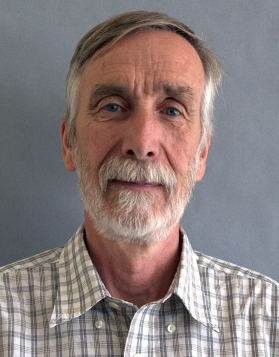
Robert L. Kelly, PhD, began participating in archaeological research in 1973, at the age of 16, and today is Professor emeritus at the University of Wyoming. He earned his BA in anthropology from Cornell University, his MA from the University of New Mexico, and his PhD in 1985 from the University of Michigan. His academic career began at the University of Louisville in 1986. He joined Wyoming’s department of anthropology in 1997. He served as department head at both institutions, was secretary of the American Anthropological Association’s Archaeology section, president of the Society for American Archaeology, editor of the Society’s flagship journal, American Antiquity, and Director of the University of Wyoming’s Frison Institute. He is among the top 2% of cited scientists in the world and has lectured in 15 foreign countries. He holds a Senior Humboldt Research Award (Germany), has been a visiting fellow at two University of Cambridge colleges, and is a Presidential Fellow of the Chinese Academy of Sciences. He has authored over 200 articles, reviews, books, monographs, and encyclopedia entries, and is co-author, with NAS member David Hurst Thomas, of the most widely used university textbook, Archaeology. He is the author of The Lifeways of Hunter-Gatherers (in press since 1995, appearing first as The Foraging Spectrum) and The Fifth Beginning: What Six Million Years of Human History Can Tell Us About Our Future (Archaeological Institute of America’s Felicia Holton book award; translated into Chinese, Korean, German, and Slovakian).
Research Interests
Kelly is an international authority on the archaeology and ethnology of hunting and gathering (foraging) societies and has directed archaeological field projects in western North America since 1979. In the early 1990s he conducted ethnographic research in Madagascar with seasonal foragers. His research focuses on understanding the roles of the environment and population density on the structure of foraging societies. This has involved understanding hunter-gatherer nomadism to understand why sedentism, the lack of nomadism, is the context of social inequality. It has also entailed surveying retreating ice patches in the western US to understand the timing of marginal high-altitude environments by hunter-gatherers. He constructed the world’s largest radiocarbon database (of the continental US) originally to document the timing of a circa AD 1000 population decline in Rocky Mountain foraging populations hinted at by excavations; that decline now appears to extend over much of the continent. He also studies how the late Pleistocene environment coupled with extremely low population density structured the lives of the first inhabitants of North America, ancestors of the continent’s Indigenous populations. Beyond this, he has been active in the Society for American Archaeology, advocating for inclusion of Indigenous communities in research, and in assessing the theoretical paradigms of archaeology.
Membership Type
Member
Election Year
2026
Primary Section
Section 51: Anthropology