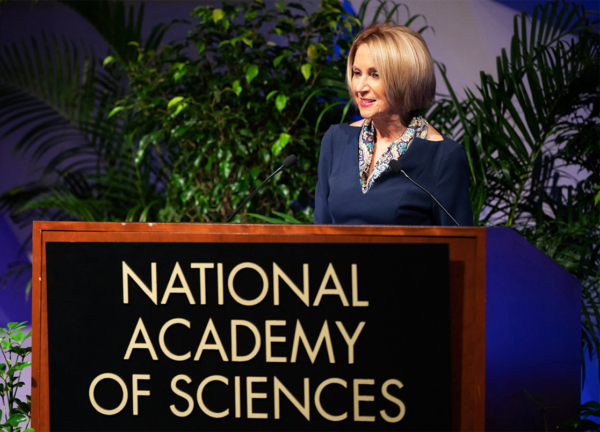
As Marcia McNutt approaches the end of her tenure as president of the National Academy of Sciences, she leaves a historic legacy as the first woman to hold that office in the institution’s more than 160-year history. Over the past ten years, McNutt has guided the Academy through a period marked by global crises, political tension around science, and rapid changes in the research enterprise. In this Q&A for Women’s History Month, she reflects on the responsibilities of breaking barriers, offers advice to women pursuing leadership roles in science, and discusses the challenges and opportunities facing the scientific community in the years ahead.
As the first woman to serve as NAS president, what has stood out to you as the most meaningful part of this historic tenure, and what challenges have shaped your approach to leadership?
Being the first woman in any position comes with tremendous responsibility. I knew, as the first woman in a variety of roles including the NAS presidency, that my success or failure was not just about me. I always carried the extra burden of knowing that if I failed, many would not interpret it as a personal failure, but as a failure for women in leadership positions. It was a heavy weight to bear. I knew that my decisions had consequences not only for my own reputation, but also for the future impact of the organizations I led. Fortunately, I had many strong mentors whom I credit with giving me the courage to make difficult decisions under pressure. And there has been no shortage of occasions that required quick and consequential decisions. 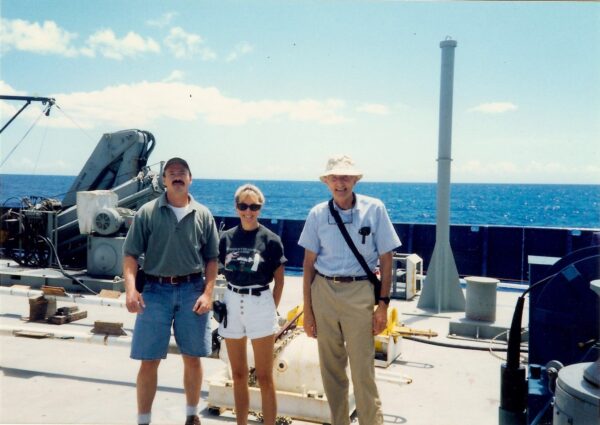
Back when I was at the U.S. Geological Survey (USGS), my colleagues at the National Oceanic and Atmospheric Administration started calling me “the master of disaster” because of the unprecedented number of emergencies I had to deal with during my relatively brief, four-year tenure there. Crises included the Deepwater Horizon oil spill, the eruption of Eyjafjallajokull in Iceland that closed down Atlantic air travel, the Tohoku earthquake and tsunami, the historic 2011 flooding of the Mississippi River basin, major fires in Arizona and New Mexico, and a variety of other significant events, including an earthquake in Virginia that damaged monuments in Washington, DC. These experiences taught me that a leader needs to keep a cool head in the face of crisis, move quickly to lessen the impacts, and embrace science in solutions.
After leaving the USGS, I thought I had seen it all. But frankly, these events shared something in common: no one wanted them to happen, and everyone (political leaders, the public, etc.) agreed that we needed science and scientists to address the events and their consequences.
The sorts of crises I have had to deal with as President of the National Academy of Sciences were in a different category altogether, with the exception of the pandemic, in that they were increasingly intentional actions to sideline science. But one aspect that both leadership positions share is the need to use science to inform, but not dictate, policy—as the latter is the responsibility of our elected representatives. Frankly, at times this position has put me at odds with some members of the NAS whose work and whose students have been hurt badly by anti-science policies and quite understandably want the NAS to push back against efforts to direct science funding to other administration priorities, put non-scientists into science leadership positions, overlay ideology on what projects are funded, and limit the flow of international talent to our research enterprise. Unfortunately, it is not the role of the NAS to weigh science funding against other national priorities, determine the mechanism by which science funding is allocated, or set immigration policy. All we can do is point out the impacts in terms of the health of the U.S. research enterprise, a task I have taken on annually in my State of the Science address. This experience has taught me that it is impossible as a leader to make everyone happy; my first obligation is to ensure the long-term continuity of the institution I lead, even at the risk of short-term pain.
As we celebrate Women’s History Month, what advice would you give to young women scientists aspiring not just to succeed in research, but also to take on leadership roles in science and policy?
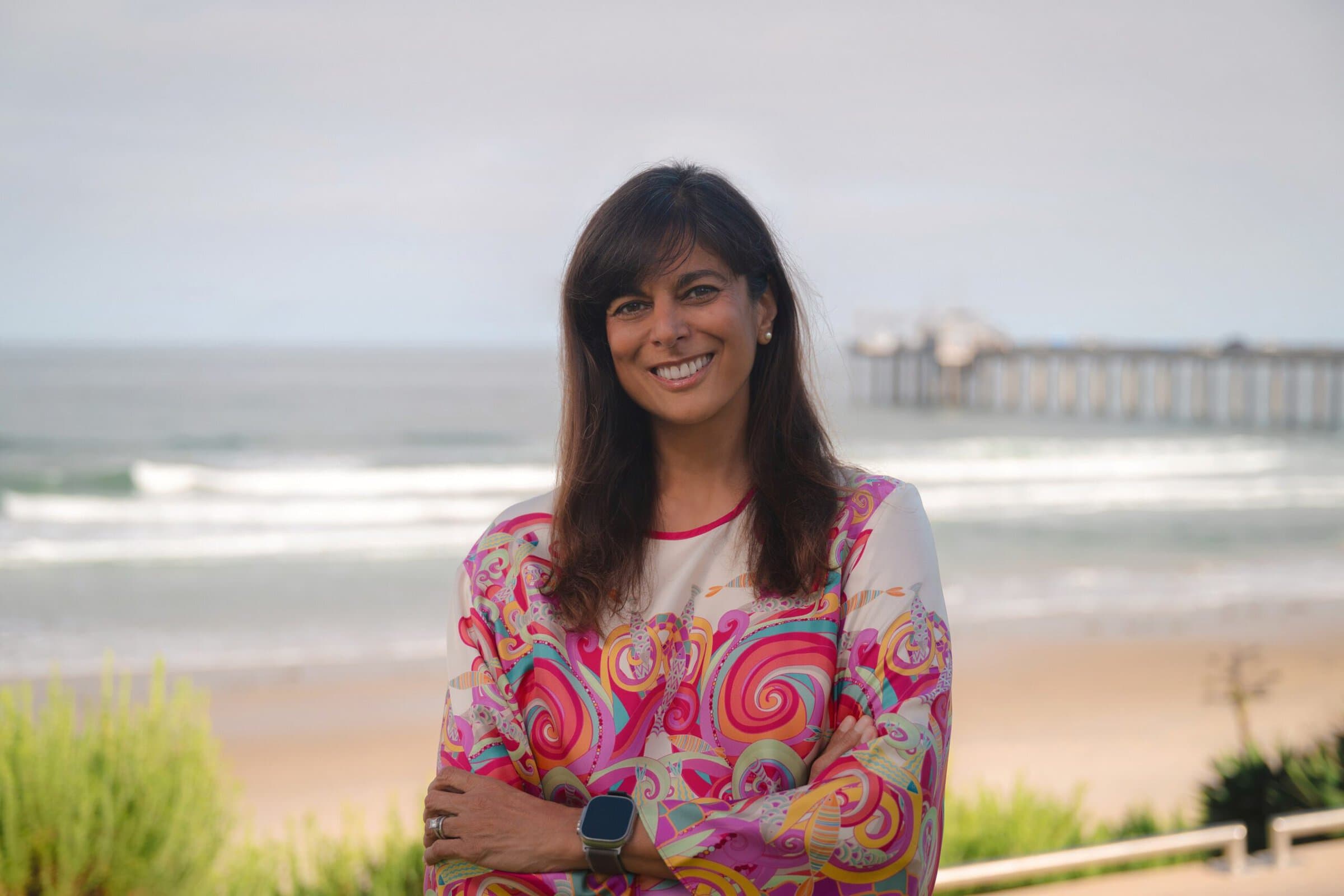
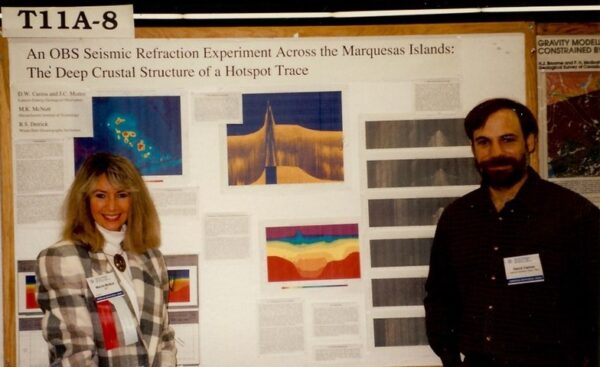 First, women need to succeed in science before they will be considered for leadership roles. My first piece of advice for a young woman is that if you have a spouse or partner, that they’re supportive of your career, which is true for men as well but is absolutely critical for women. Second, protect your reputation at all costs. Good reputations are slowly built on the foundation of a lifetime of good decisions and can be destroyed instantly with one bad decision. The reputation of an institution becomes entwined with the reputation of its leader. No search committee will choose a leader whose reputation will not enhance that of the institution she will lead. Third, take on the big issues to do something significant. Scientists doing incremental work do not get noticed, much less chosen for major leadership roles. Fourth, get out and about—go to meetings, serve on committees, and engage with people outside your own discipline. There are many qualified women out there who don’t have name recognition, and it’s important to impress as many people as possible. Fifth, know yourself. I had the opportunity relatively early in my career to have my strengths and weaknesses assessed, and the experience was life changing. For example, I discovered that I could be so focused on getting the right answer to a problem that I could run roughshod over others to get there. I needed to understand better how my behavior would affect the willingness of others to accept me as a leader. Finally, everyone needs to have a diversion outside of work to maintain sanity and avoid burnout. For me, riding, training, and caring for my horses has been essential to my success. Some of my best ideas have suddenly come to me while mindlessly shoveling manure or gazing out onto the endless horizon from a mountaintop in the High Sierra.
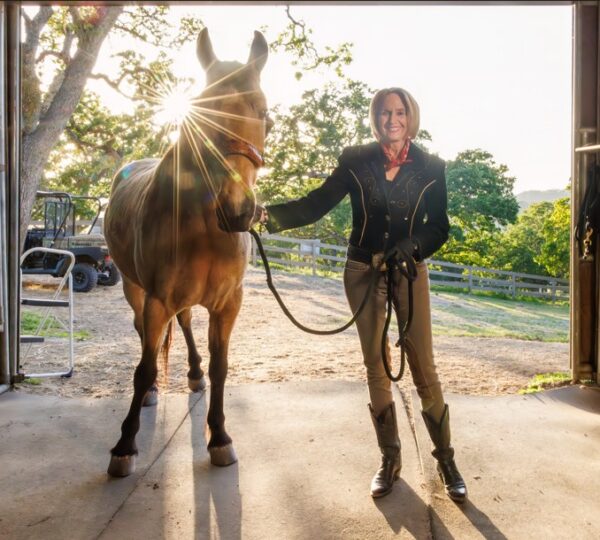
Image by Christopher Michel
What emerging opportunities or challenges in science do you hope the NAS will prioritize in the coming years, and how can its members contribute to shaping that future?
I see several major challenges right now. The first is the prevalence of short-term thinking by those in government leadership positions. Many of these leaders come from the business community, where the focus is on the quarterly reports or the latest stock price. On the other hand, science plays the long game, because the laws of nature always win out in the end. There is an increasing risk that as vaccine mandates are dropped, infectious diseases will make a staggering comeback and take many lives. Climate change will reshape human society for the worse, as the area of the planet conducive to human habitation shrinks, wars result from the need for massive human migration towards the poles, and the delicate balance of nature is upended faster than species can evolve. The NAS and its members can make essential contributions as we demonstrate that science is the best tool that humankind has ever produced to see into the future. We ignore the predictions of science at our own peril.
The second, equally profound challenge is the sense from Main Street America that science hasn’t benefitted the average citizen. Many see their jobs and entire industries becoming obsolete with the advent of new technologies. My father worked in the same office for his entire career, but my grandchildren will likely have a series of careers requiring constant retooling of their skills. Unless we as scientists can demonstrate our value to everyone, trust and support for science will erode. The NAS, and especially its members, can help here. For example, the universities in which many of our members work are embedded in local communities and work to benefit those communities. We need to show those communities that we are using science to improve their health, safety, economic security, and quality of life.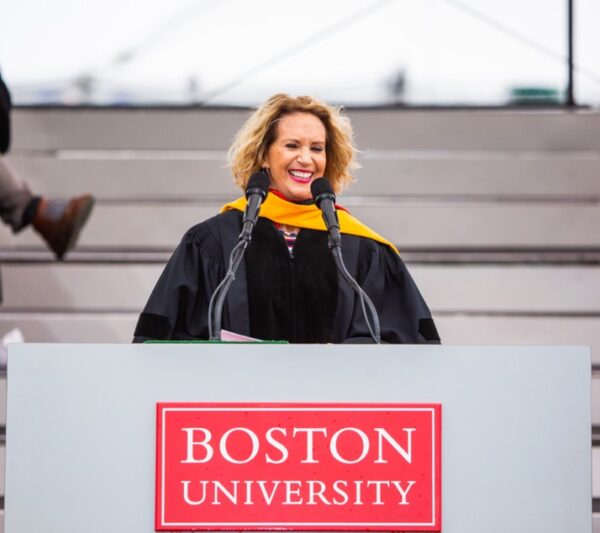
Third, collectively universities, government, industry, and philanthropy need to chart a fresh course for the American research enterprise. Our current system was developed immediately after World War II at a time when international competition was mostly absent, science philanthropy had not yet grown to anywhere near its current level, the best and brightest from everywhere were willing to come to America to support our research enterprise, and industry R&D was a tiny fraction of what it has grown to today. China is now the dominant nation for science, and we are losing ground at a rapid pace. For this issue, the NAS and its members can help by proposing innovative changes to the U.S. research enterprise that account for the diversity of funders and performers of research we enjoy today, the reduced flow of international talent to the U.S., and the changing career paths for students with bachelors, masters, and PhD degrees.
Finally, we need to make science bipartisan again. For most of my professional life, science was supported equally by both major political parties. Now we are deeply divided as a nation on the role and conduct of science. But the good news is that there is agreement on the majority of scientific topics. Therefore, I suggest that the NAS and its members focus our activity on topics for which everyone agrees that investment is in the best interests of the American people. By first building bipartisan support for this work, we can later tackle the issues for which partisan views can sometimes cloud informed judgement.
Latest Posts

Special Feature
August 20, 2026
World Mosquito Day Q&A with Nora Besansky: Understanding Malaria’s Most Vexing Vectors
Special Feature
July 21, 2026
New NAS President Shares His Vision for the Academy