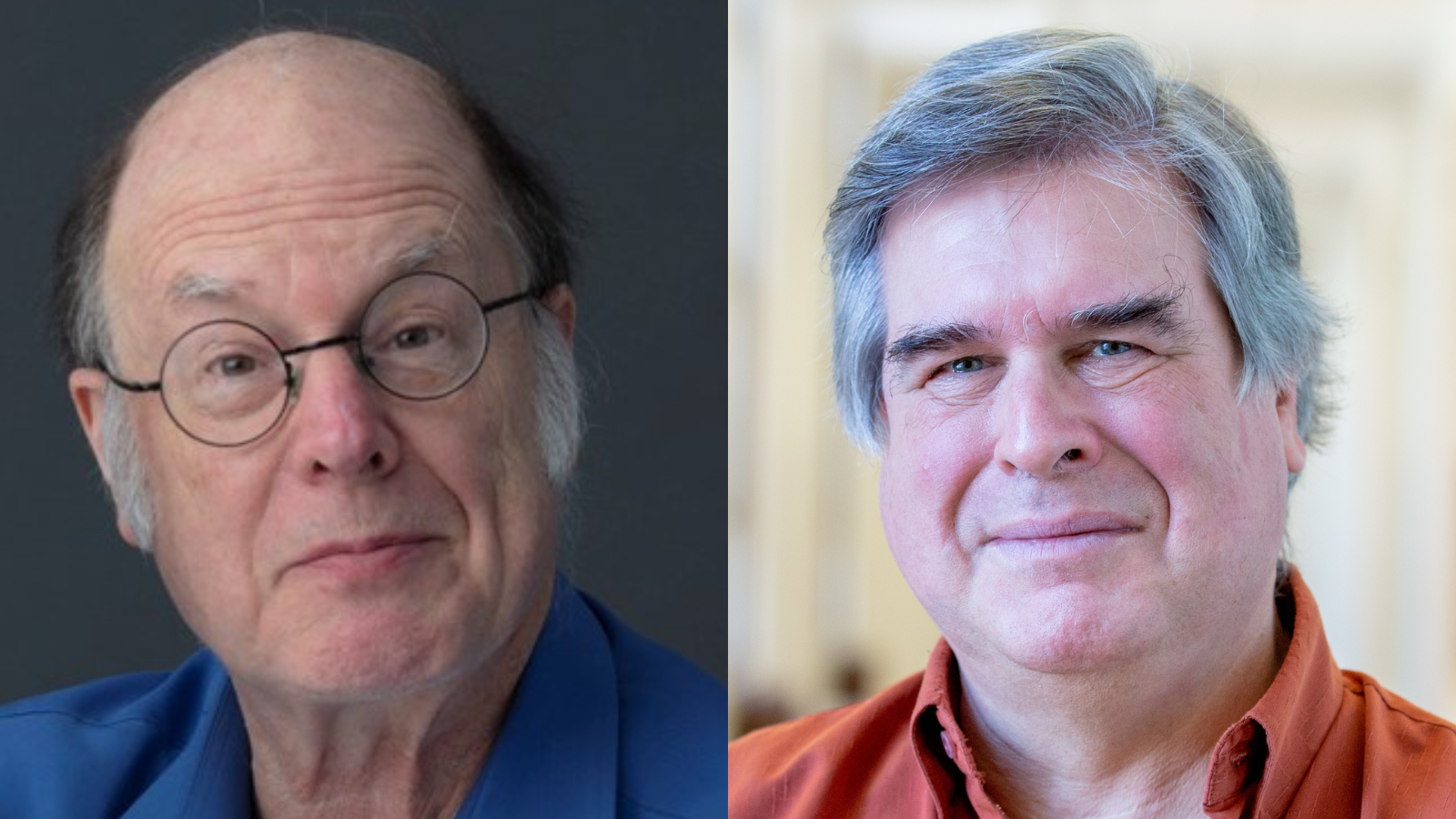
Weather and climate shape nearly every decision we make, often in ways we don’t even notice. In recognition of World Meteorological Day, atmospheric scientist J. Marshall Shepherd shares insights about the rapid evolution of meteorology and its growing role in addressing global challenges. From major advances in AI-driven forecasting and satellite observations to the increasing importance of social and behavioral sciences, Shepherd describes a field operating at unprecedented capability, while facing the urgent, compounding realities of climate change. He reflects on how improved data, interdisciplinary collaboration, and clearer communication are shaping decision-making at every level, and why the next generation of scientists must be equipped to connect research with real-world impact.
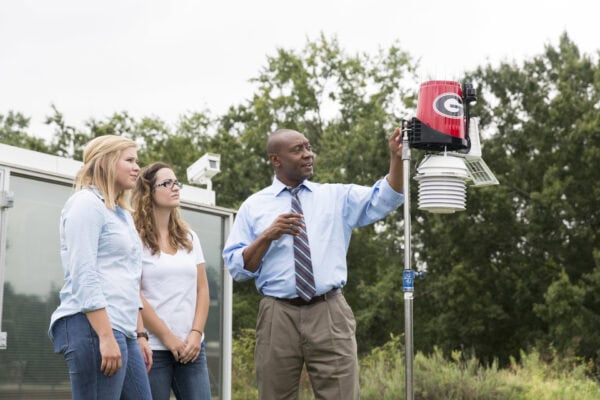 As a leader in atmospheric sciences, how do you see the role of meteorology evolving in addressing global challenges like climate change and extreme weather events?
From a scientific and technological perspective, I firmly believe that we are in the golden years of my field. Advances in AI, satellite technology, numerical modeling, and basic science principles have significantly moved the needle forward on weather forecasting and understanding how climate is changing. People may take it for granted but the accuracy and precision of weather information available in their lives daily is stunning and next level. The public and decision-makers use information with reduced uncertainty. Wind-shear related aviation disasters have essentially been eradicated. Sound guidance on looming hurricanes is provided up to a week or more in advance, and we now have the ability to warn about a tornado up to 2 hours in advance rather than minutes. Virtually everyone has meteorological information in their pockets at this very moment.
At the same time, climate change is the crisis of our generation and the next several ones to come. It has compounding and cascading impacts on the economy, national security, food-water supply, infrastructure, and public health. The “So what’s” are everywhere because weather and climate touches, directly or indirectly, almost every decision you will make today as an individual, business, policymaker, or stakeholder. Much of this capacity comes from our robust federal research and operational enterprise. We must continue to support and grow it. However, the nexus of engagement among federal, private, NGO, and academic sectors is continuing to emerge and is one of the most critical evolutions that I have observed over my time as a student, NASA scientist, former American Meteorological Society President, and university professor.
What advances in meteorological research over the past decade excite you most, and how do you see them impacting society in practical ways?
For me, the integration of social-behavioral sciences has been so important. We have great computer models, radars, and satellites. Yet, people still die in weather disasters or have their lives disrupted. What we have learned is that significant communication, perception, interpretation, and literacy issues still loom with messaging. The perfect forecast for a tornado or landfalling hurricane quickly becomes imperfect if someone did not receive the risk communication or did not understand it. That’s why I am excited about the social sciences firmly at the table within our field.
I spent the first decade or so of my career at NASA working on weather and climate satellite missions. Much of that data is finding its way into the weather models. People debate about the American model or European model, but the backbone of all of them is the amount of elite data going into them from this amazing generation of satellites, radars, and other observing systems. I played a small hand in that throughout my career and am proud of it.
We must continue to push the need forward on emerging technology like AI-based warn-on-forecast systems, phase-array radar systems, and other innovations. During the 2025 hurricane season, AI models outperformed many of our traditional modeling systems. That’s not a threat; from my perspective, it is an opportunity.
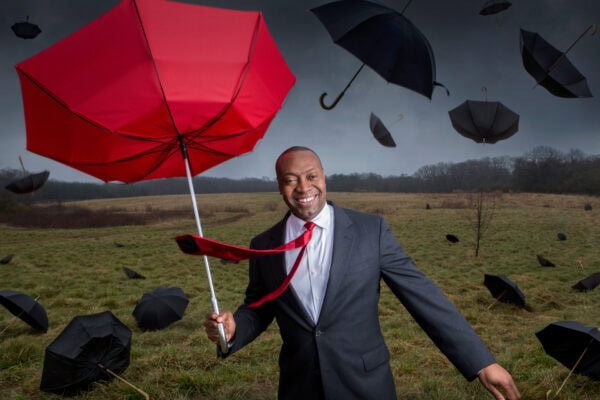 Meteorology can often be misunderstood or politicized in public discourse. How do you approach communicating complex weather and climate science to diverse audiences?
In the past decade, I have explored the psychological, literacy, perception, and social-cultural marinades that shape how people consume weather and climate science. As I articulated in my popular TedXUGA talk, there are bias and belief systems that shape how people view weather information. For example, there are people that think rodents and almanacs are as good as AI weather models or climate simulations. We also know political, cultural, geographical, economic, and other contextual marinades shape how people view our field.
We live in an era misinformation or disinformation related to climate change, weather modification, and warnings. At the same time, we are steeped in a social media landscape where clicks, likes, and shares can shape “understanding” of a storm or climate change more than peer-reviewed literature, expertise, and scholarship. As such, we have to engage beyond the ivory tower. If we do not, people with misinformation, agendas, or bad information will fill the void left behind. I wrote a piece in Forbes in 2016 entitled, “9 Tips for communicating science to non-scientists.” I lay out strategies because many of us were not trained within the Academy to do media interviews, testify before Congress, or effectively use social media. Our training as scientists has not prepared us for this new landscape, and there are outdated views on roles of scholarship and the Ivory Tower. I approached that inertia of thought in my NAE Perspectives piece, “The Case For The Science Popularizer.
Can you share a memorable moment from your career where meteorological research directly influenced decision-making or public safety?
While most of my career has been on the research and development side of the house, I think there are examples. I was Deputy Project Scientist for NASA’s Global Precipitation Measurement Mission at one point in my career. Precipitation is critical for so many societal applications. I am always proud of the work we did at NASA and still do as an agency. People have a limited view of what the nation’s space agency does. They think it is astronauts, Mars rovers, and rockets. NASA has a robust Earth Sciences division that is addressing challenges through its technology and expertise. Such weather, land, ocean, and other information shapes decisions and safeguards the public every day.
I have also been proud to serve my country through various Congressional, White House, or other public briefings and testimonies. To be considered a voice to shape outcomes on such scales is humbling and an honor.
On local scales, my informal forecasting shapes decisions in my community, university, and beyond. I would be remiss not to mention the pioneering talk show Weather Geeks, on which I collaborate with the Weather Channel as host. We created the first Sunday network television talk show/podcast about weather, climate, and science. I am convinced that it and my Forbes writing help with science literacy. Both efforts are still going strong today in evolving formats to maximize reach.
At the end of the day, we have no Plan B planet, so it is important that we are good stewards of this one and work collectively to communicate why what we do is so valuable.
What advice would you give to the next generation of meteorologists who want to make a difference in both science and society?
I have talked consistently about “End-to-End” Science. The next generation of meteorologists and climate scientists must be nimble, multidisciplinary, and versed in more than just equations and maps. Traditional tools of the academic trade like theory, publications, and conferences are still valuable. However, that toolbox will require media savvy, writing skills, AI proficiency, and a firm ability to connect with the values and literacy-level of varied audiences.
Latest Posts
Special Feature
March 26, 2026
A Historic Presidency: Marcia McNutt Reflects on Leading the National Academy of Sciences
Featured
March 24, 2026
NAS International Member Receives 2026 Abel Prize