
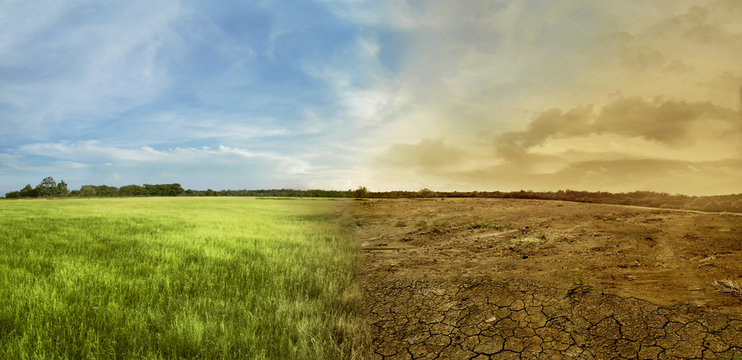
Over billions of years of Earth’s history, microbes have evolved tremendous genetic diversity. Communities of bacteria, fungi, archaea, and viruses live in nearly every habitat on the planet. With their stunning diversity of lifestyles, these microbiomes could help blunt the impact of climate change and other wicked environmental problems. Microbiomes regulate planetary element cycles, making them prime candidates for sequestering carbon, particularly in agricultural soils. Because many microbes form partnerships with plants, microbiomes can be tapped to boost crop yield and promote food security in a changing climate. In the ocean and on land, microbiomes play key roles in habitat restoration, bioremediation, and bioenergy production. A new era of microbiome research offers promise to tackle climate change while providing crucial benefits for society such as improved public and environmental health. Fulfilling this promise will require a commitment to collaboration among microbiome scientists, decision makers, and communities of people across multiple sectors.
Featured Speaker:

Dr. Steven Allison
Dr. Allison is a Professor of Ecology at the University of California, Irvine, in the Department of Ecology and Evolutionary Biology with a joint appointment in the Department of Earth System Science. He holds a PhD in Biological Sciences from Stanford University. At UC Irvine, he directs the Newkirk Center for Science and Society and teaches courses on ecosystem science and communication skills. Dr. Allison’s research addresses the diversity and resilience of microbial communities along with the impact of climate change on soil carbon cycling.
Related Events

Event Disclaimer
It is essential to the National Academy of Sciences mission of providing evidence-based advice that participants in any of our meetings or events avoid political or partisan statements or commentary and maintain a culture of mutual respect. The statements and presentations during our meetings or events are solely those of the individual participants and do not necessarily represent the views of other participants or the National Academy of Sciences, which is a non-partisan, tax exempt organization.