
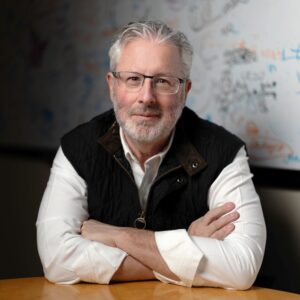
Photo courtesy of Christopher Michel
WASHINGTON — Neil H. Shubin, Robert R. Bensley Distinguished Service Professor of Organismal Biology and Anatomy and vice dean for academic advancement at the University of Chicago, has been elected as the next president of the National Academy of Sciences. He will begin his five-year term on July 1, succeeding Marcia McNutt, who has served as the Academy’s president since 2016.
“I am honored to be elected to lead the National Academy of Sciences at a time when its tradition of objective, nonpartisan counsel — offered in service to the country for over 160 years — is increasingly vital to advance the health, security, and prosperity of our nation,” said Shubin.
A renowned evolutionary biologist, educator, author, and science communicator, Shubin currently leads a dynamic molecular biology and paleontology research laboratory at the University of Chicago, and has held faculty and senior leadership positions at the University of Pennsylvania, the Marine Biological Laboratory in Woods Hole, Massachusetts, and the Field Museum in Chicago. He has led fossil-hunting expeditions around the world including to Ellesmere Island in Nunavut territory, the northernmost region of Canada, where in 2004 his multidisciplinary team made a breakthrough discovery — a fossil representing an intermediate body plan between fish and amphibians, which the team named Tiktaalik, or “large freshwater fish” in Inuktitut.
In 2008, Shubin published his critically acclaimed book, Your Inner Fish, a national bestseller that received the Phi Beta Kappa Award in Science and was recognized by the National Academy of Sciences as the best science book of the year. The book shares Shubin’s insights as a fish paleontologist teaching a human anatomy lab and his expeditions that uncovered Tiktaalik. Shortly after it was published, Shubin worked with the Howard Hughes Medical Institute to turn the book into a popular miniseries that aired on PBS, winning an Emmy as well as the National Academy of Sciences communication award for television and film. He also teaches a course based on Your Inner Fish to non-biology majors.
“Neil Shubin’s enthusiasm for sharing the wonder of science and its value for guiding decision-making makes him the ideal person to lead the NAS in the years ahead,” said NAS President Marcia McNutt. “I am thrilled to welcome him as my successor.”
Shubin earned his bachelor’s degree in biology from Columbia College of Columbia University in 1982 and a Ph.D. in organismic and evolutionary biology from Harvard University in 1987. He did his postdoctoral work at the University of California, Berkeley. He holds numerous distinctions and honors, including receiving the Roy Chapman Andrews Society Distinguished Explorer Award in 2019 and the 2024 Viktor Hamburger Outstanding Educator Prize. Shubin was elected to the National Academy of Sciences in 2011 and has served on several of its committees.
Election of NAS International Secretary and Councilors
Cherry Murray, Benjamin Peirce Professor of Technology and Public Policy and professor of physics, emerita, Harvard University, has been elected as International Secretary of the NAS. She has held several national and global leadership positions, including directing the U.S. Department of Energy Office of Science, co-chairing the United Nations 10-Member Group and the InterAcademy Partnership, and serving on advisory committees for the Singapore National Research Foundation, the Max Planck Society and the Helmholtz Association in Germany, and RIKEN in Japan. Murray will be responsible for the international activities of the Academy during her four-year term beginning July 1.
Councilors elected to three-year terms on the NAS Council beginning July 1 are:
- Naomi J. Halas, university professor and Stanley C. Moore Professor of Electrical and Computer Engineering, Rice University
- Susan Marqusee, Distinguished Professor of Molecular & Cell Biology and Chemistry, University of California, Berkeley
- Diana C. Mutz, Samuel A. Stouffer Professor of Political Science and Communication and director of Institute for the Study of Citizens and Politics, University of Pennsylvania
- David A. Tirrell, provost and Ross McCollum-William H. Corcoran Professor of Chemistry and Chemical Engineering, California Institute of Technology
The National Academy of Sciences is a private, nonprofit institution that was established under a congressional charter signed by President Abraham Lincoln in 1863. It recognizes achievement in science by election to membership, and — with the National Academy of Engineering and the National Academy of Medicine — provides science, engineering, and health policy advice to the federal government and other organizations. Members of the Academy are elected by their peers for outstanding contributions to research. The membership includes approximately 2,650 active members and 550 international members, with a total of 190 members having been awarded Nobel Prizes.
Contact:
Dana Korsen, Director of Media Relations
Office of News and Public Information
202-334-2138; email news@nas.edu
Latest Posts
Featured
March 10, 2026
PNAS Announces Six 2025 Cozzarelli Prize Recipients
Featured
January 27, 2026
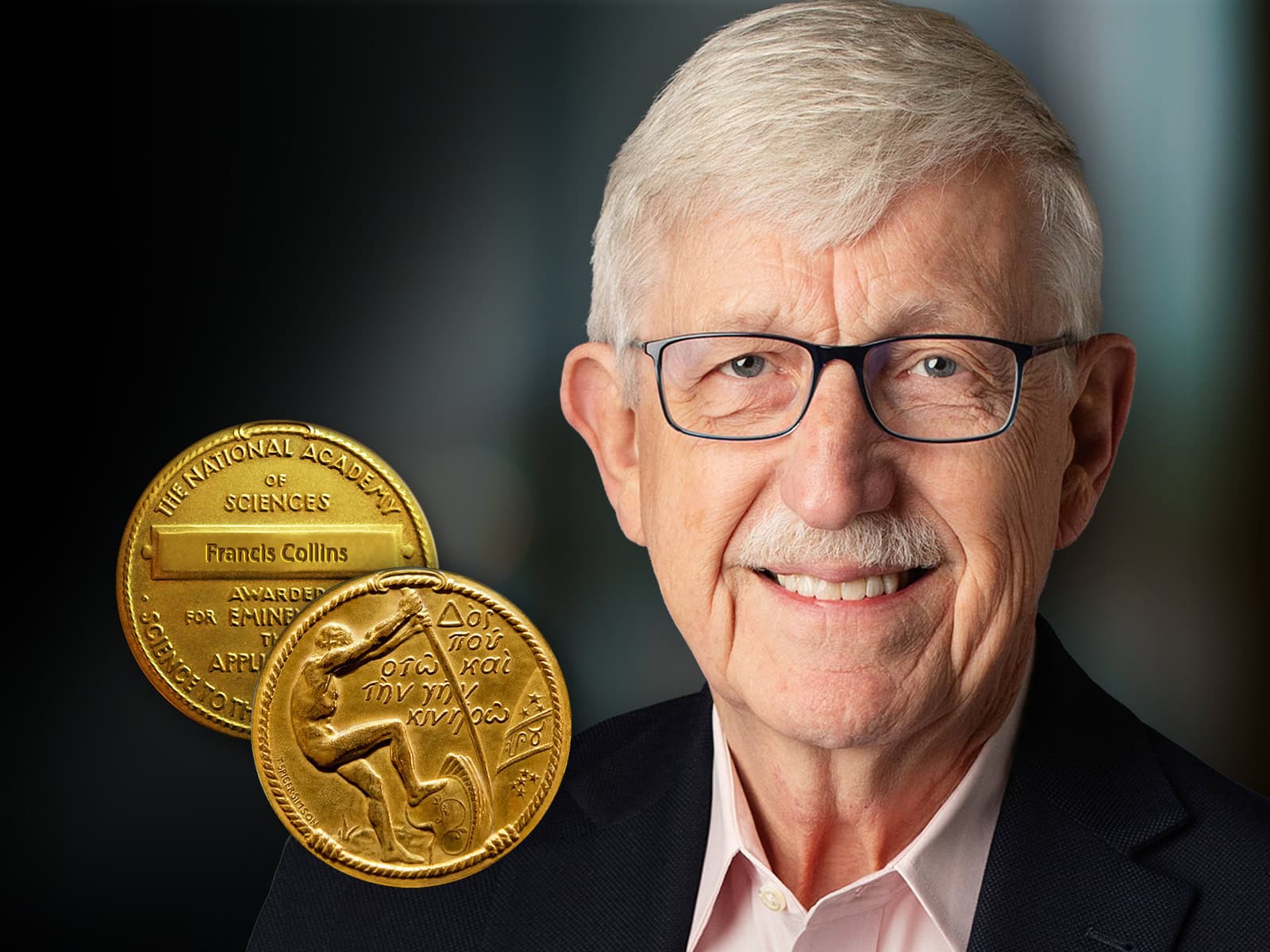
Francis Collins to Receive Public Welfare Medal — Academy’s Most Prestigious Award
