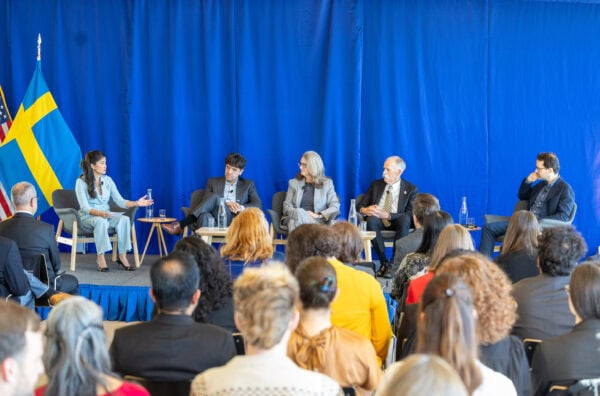
Karl Deisseroth, who shares the 2026 Nobel Prize in Physiology and Medicine with Peter Hegemann and Georg Nagel, was recently celebrated at a scientific symposium in Washington, D.C., co-hosted by the National Academy of Sciences and the Embassy of Sweden. Through a fireside chat and panel discussion among experts, the event delved into the science behind the Nobel laureates’ work on light-gated ion channels and optogenetics, and explored the next frontier in neuroscience, breakthrough technologies, and international cooperation.
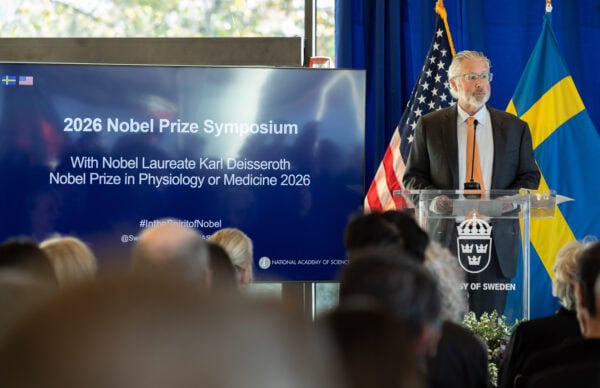 In opening remarks, NAS President Neil Shubin highlighted the promise of curiosity-driven science. “Scientists put an ancient invention to work to understand one of the newest and most complex biological inventions,” he said. “They used biological diversity to probe the deepest questions of our minds.”
During a fireside chat, Deisseroth described the unpredictable nature of scientific discovery and how optogenetics has opened new avenues for investigating the brain. He discussed how the technique, which uses light to control the activity of specific neurons, has enabled researchers to investigate the neural circuits underlying complex emotional states such as anxiety. 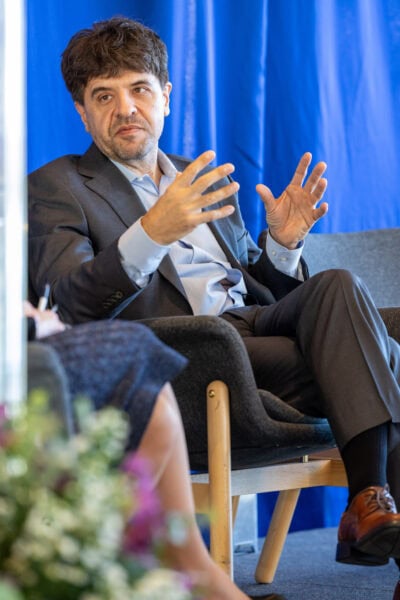
“With optogenetics, we were able to identify the different connections and projections across the brain and recruit different features of anxiety and assemble them together,” he said. “And so, the modularity of a brain state becomes an interesting concept, because this is something that is definable by connections across the brain.” he said. These findings could eventually inform new approaches to treating psychiatric conditions.
Reflecting on the broader significance of scientific research, Deisseroth emphasized the importance of finding genuine joy in scientific endeavors and allowing promising ideas to develop in unexpected directions. He also expressed hope that greater public understanding of neuroscience could help people better understand themselves and one another.
Deisseroth was joined by Konstantinos Meletis, Professor of Systems Neuroscience at the Karolinska Institutet; Nicholas Spitzer, President of the Society for Neuroscience; and Andrea Beckel-Mitchener, Acting Director of the National Institute of Mental Health for a panel discussion moderated by Caroline Montojo, President and CEO of the Dana Foundation.
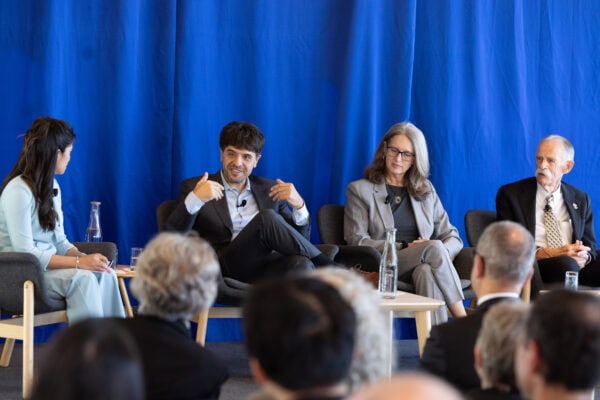
The panel explored how advances in brain imaging, neural circuit mapping, and artificial intelligence are creating new opportunities to understand the brain and develop treatments for psychiatric disorders. Speakers discussed the potential for more precise biological markers of mental illness, as well as promising applications of technologies such as deep brain stimulation for patients with treatment-resistant conditions. They also emphasized the importance of integrating ethical considerations and patient perspectives as new neurotechnologies move toward clinical applications.
Turning to international collaboration, Spitzer noted that scientists from different countries often approach problems differently, drawing on their distinct backgrounds and experiences. “This cross fertilization of backgrounds and ideas is of immense value.”
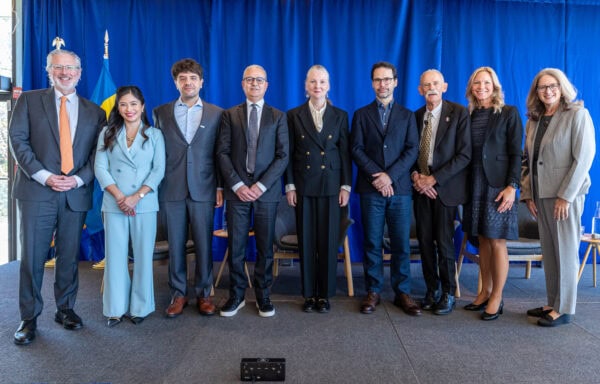
In a Q&A with the audience, panelists also discussed how large-scale research initiatives and interdisciplinary approaches can help connect discoveries across different levels of brain organization, from individual cells to complex behaviors. Looking to the next generation of neuroscientists, speakers emphasized the importance of curiosity, persistence, and scientific integrity, as well as communicating research clearly to build public understanding and trust in science.
The discussion’s optimism for the future of neuroscience and emphasis on the freedom to pursue questions whose answers may lead to unexpected discoveries echoed Shubin’s opening remarks. “Some of those questions will change our understanding of the world, and we will be celebrating their Nobel Prizes in the future.”
Photos courtesy of Antonella Ciancio
Latest Posts
Featured
October 5, 2026
NAS Members Receive Nobel Prizes

In the News
September 10, 2026
PNAS Celebrates the 2026 Lasker Awards