When people think about biodiversity, they often picture rainforests, coral reefs, or endangered wildlife, not cockroaches in kitchen corners or coyotes crossing city streets. But in her new book Outsider Animals, evolutionary biologist Marlene Zuk argues that these overlooked species are also part of the story of biodiversity in a human-shaped word, where cities, landscapes, and ecosystems are increasingly intertwined. In a Q&A for the International Day for Biological Diversity, Zuk discusses why humans judge some animals more harshly than others, what urban wildlife reveals about adaptation, and why biodiversity includes far more than the animals we instinctively choose to protect.
In Outsider Animals, you explore species that live alongside humans but often fall outside our affection or concern. Why do some animals become beloved while others are treated as nuisances or ignored altogether?
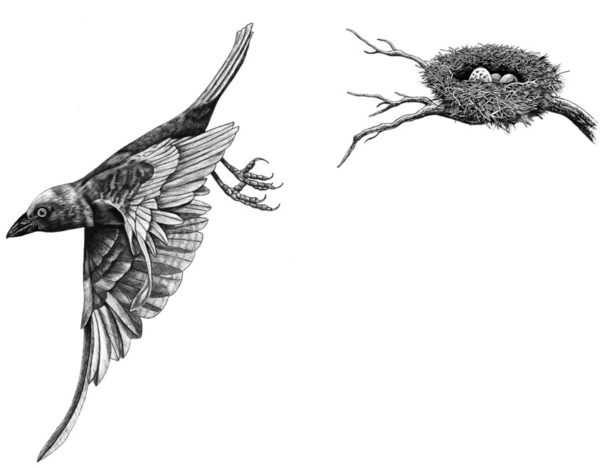
The most obvious answer is that some of the outsiders can be harmful, or at least annoying. Rats and raccoons eat our garbage, gulls steal our French fries. At the same time, our distaste for them is often way out of proportion to their nuisance potential. It’s 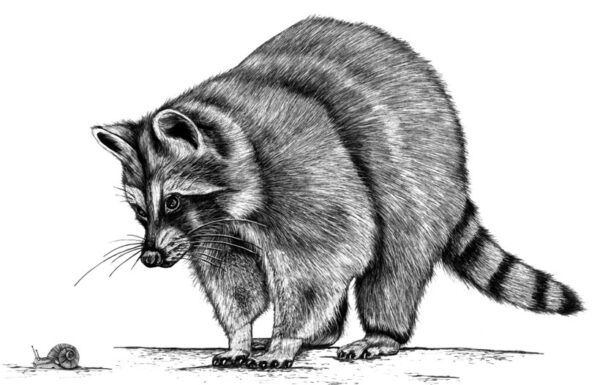 interesting to see how people condemn animals for their normal behavior. For example, there’s a lot of disdain for cowbirds being brood parasites, as if they are lazy and could raise their own offspring if they just tried harder, or were more morally upright, or something. And evidence suggests that rats are despised because they symbolize urban decay; they represent an uncaring society or government, rather than being the problem themselves. Cockroaches spread disease only when it is already present in the environment – they are not vectors like mosquitoes or ticks. I don’t think we need to love all animals, or welcome the sight of roaches in our kitchens, but I do hope we can recognize that the valorization of certain species over others can be arbitrary.
Biodiversity conversations often focus on endangered or charismatic species. What can “outsider animals” teach us about the overlooked forms of biodiversity already woven into our everyday lives?
I like to think of my book as an appreciation of those overlooked species. I mean “appreciation” not as unmitigated praise, but in the same way you might approach a course on appreciating wine, or art. You probably won’t leave those courses loving every piece of art or every bottle of wine, but that isn’t the point. One definition of appreciation is “a full understanding of a situation,” without values attached, and I like the idea of applying that open-mindedness to biodiversity. We don’t have to adore every species, but we miss so much when we dismiss many of them as bothersome pests.
Cockroaches, for instance, are extraordinarily diverse in their life histories and their behavior. Some are monogamous, with a male and female staying together and providing parental care for the offspring. Some give birth to live young after a kind of pregnancy, which has afforded insights into the way that a female’s immune system responds to reproduction. Some of them are stunningly beautiful, with jewel-like coloration. If we just focus on the pests, we miss out on that variation.
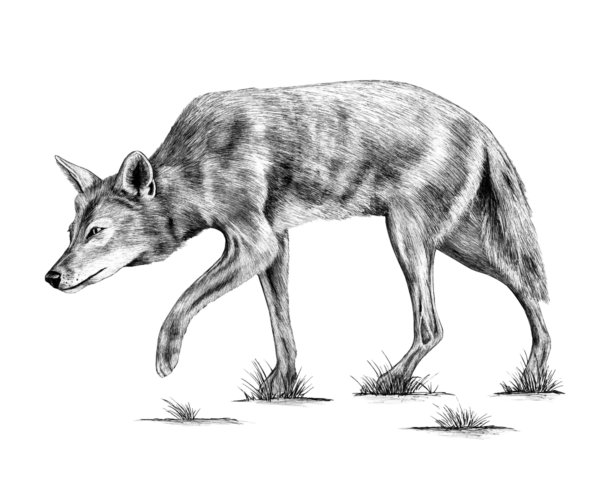
In addition, we often try to categorize other species, as the title of scientist Hal Herzog’s book about animals puts it, Some We Love, Some We Hate, Some We Eat. Herzog points out that our relationship with nonhumans is complicated beyond those three types, and I too have always been leery of creating tidy classifications. What fascinated me about the outsider animals is that they can’t be easily categorized into good or bad, maybe because despite being hated under some circumstances, they may also be useful. Rats, for instance, are both urban pests and valuable medical experimental subjects. Coyotes are loved by wilderness fans but feared by urbanites. They sit at the borderlands, but all of them are part of biodiversity – we aren’t just considering rain forests or pristine oceanic islands.
 Your work often challenges assumptions about what is “natural.” How have human ideas about purity, invasiveness, or belonging shaped the way we value different species?
Asking people what is “natural” can lead down a lot of rabbit holes, whether regarding their diet, their child-rearing practices, or their feelings about animals. It’s easy to have the idea that nature existed whole and perfect before humans came along, or maybe before agriculture, or maybe before the Industrial Revolution. That in turn leads us to vilify the introduction of animals into places they didn’t occur before human intervention.
The truth, of course, is that nature and the environment aren’t static, and while there are some obvious cases in which introduced species have been a disaster – think rats on many oceanic islands – the situation is more complex than people realize. Coyotes have been associating with humans for thousands of years and were well-known to native Americans. So being in urban areas isn’t an anomaly for them. And cowbirds aren’t the villains responsible for songbird declines except in a very few cases, and they didn’t rapidly spread through North America because of human activities. Once introductions happened, species continued to interact. Many native species of California butterflies now rely on non-native plants for their survival and reproduction. So, the question of where a species “belongs” is hard to answer. That’s not a cop-out; it’s a call for people to recognize some of the gray areas.
Many outsider animals—rats, pigeons, coyotes, insects—are remarkably adaptable. What does their success reveal about evolution in rapidly changing human environments?
People have long recognized that being able to live in a variety of habitats makes it more likely that an organism, whether plant or animal, will thrive. The outsider animals are poster children for surviving anthropogenic change. Cabbage white butterflies, for example, take roadside salt, zinc, and even mercury in their stride. Their caterpillars can eat ground-up tires. Animals that are neophilic, attracted to new things, tend to do well in cities. So, the outsider animals can give us hope that biodiversity can persist despite human-caused damage to the environment. At the same time, we can’t just assume that everything will come to its own equilibrium – no one wants to live in a world consisting solely of zebra mussels, rats, and kudzu. But management of these animals needs to take their adaptability into account and recognize that we can’t just rest on our laurels. Toronto is in what seems to be a never-ending arms race with raccoons when it comes to securing rubbish bins, for example.
After writing this book, has your own relationship to urban or unpopular animals changed? Are there species you now see differently when you encounter them in daily life?
 Full (slightly embarrassed) confession: I’ve always been a bit of an outlier in my enthusiasm for animals that other people dislike. Maybe it comes from spending much of my career working on insects, which are not exactly most people’s favorites. At the same time, each chapter of the book involved me falling in love with its subject animal. Perhaps because I am not a New Yorker, that took the longest with rats. I don’t have my own stories about them, and I don’t feel that they’ve been part of my life the way that people in very urban areas might. But it eventually happened.
I also learned enough to change my attitudes about coyotes, which I never feared excessively but which made me ever-so-slightly nervous. But after finding out that coyotes are far more focused on other canids, like dogs, than they are on people, I relaxed a bit. And I was fascinated to discover that even coyotes’ interest in dogs is more as a potential competitor than as prey; when you see a coyote while walking your dog, and it seems to be following you, it’s really just providing what Geoff Miller from the Twin Cities Coyote and Fox Project calls an escort service, making sure that everyone leaves its territory without harming the coyote or its pups.
When I give talks about the book people sometimes ask me about this or that animal to see if I can find something good to say about it. I almost always can, but I have to say that I never did find opossums, which are animals a lot of us see in our yards or roadsides, all that appealing. It just seems like North America got robbed when it came to marsupials. If that’s the only marsupial we can have, why didn’t we end up with one of the cute little gliders, or even a bandicoot or bilby?
Illustrations by David Tuss
Latest Posts

Special Feature
August 20, 2026
World Mosquito Day Q&A with Nora Besansky: Understanding Malaria’s Most Vexing Vectors

Special Feature
July 21, 2026
New NAS President Shares His Vision for the Academy