For World Mosquito Day, we spoke with Nora Besansky about the mosquitoes that transmit malaria and the genetic and evolutionary forces that make them such effective disease vectors. Besansky, whose research has helped advance our understanding of Anopheles mosquitoes, discusses the staggering global burden of malaria, how comparative genomics can reveal the traits that enable mosquitoes to transmit the disease, and the scientific advances—from vaccines and next-generation bed nets to emerging genetic approaches—that offer hope for the future.

If there’s one thing everyone should know about mosquitoes and malaria, what would it be?
What everyone should know is the ongoing scope of the malaria problem in the tropical world. By far the heaviest burden—approximately 95% of all global cases and deaths annually—is borne by Africa. Of the estimated 579,000 malaria fatalities annually on the continent, most are children under five who are especially vulnerable due to the lack of acquired immunity. Because such large numbers are abstract and difficult to grasp, the Tanzanian malaria researcher Dr. Wen Kilama once famously likened the number of deaths (~1,500 per day in 2024) to three or four 747 planes fully loaded with children crashing against a mountain every day for a year, and he wondered if the world would stand by or take measures to prevent it.
Probably most people are aware that malaria has afflicted humanity for millennia, but fewer know that malaria once ravaged temperate regions like Europe and the U.S., as well as the tropics. Elimination from temperate regions happened because the cycle of malaria parasite transmission between humans and mosquitoes was interrupted, not because the particular mosquitoes responsible for spreading malaria were themselves eliminated; they remain in place today performing ecosystem services like pollination and supporting the food web. Elimination from tropical regions is a far greater challenge.
How has your research on the genetics of Anopheles mosquitoes advanced our understanding of malaria or efforts to prevent it?
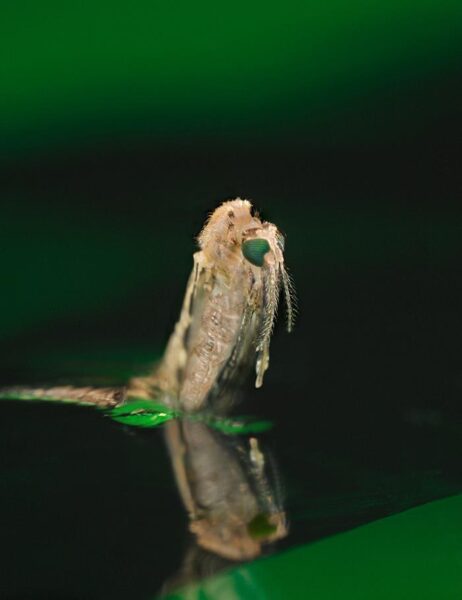
Let’s begin with the fact that there are over 3,500 species of mosquitoes known to science, but only the subset called Anopheles transmits human malaria—for reasons not understood in any detail. What’s more, only a tiny fraction of the ~500 Anopheles mosquito species play a major role in human malaria transmission as so-called ‘malaria vectors,’ maybe 30 to 50 species. Even more interesting, few of these major malaria vectors are closely related to each other. In fact, the nearest relatives of most major malaria vectors are not malaria vectors at all, with few exceptions.
These facts have important implications for understanding the genetic basis of traits common to major malaria vector mosquitoes. Evolutionarily, there is an apparent genetic barrier that prevents non-Anopheles mosquitoes from being able to transmit human malaria parasites. But within Anopheles, the suite of traits that allow a handful of mosquito species to transmit human malaria so successfully have evolved rapidly and repeatedly. Powerful insights about these traits—what they are and how they evolved—can be gleaned from comparative genomics: comparing similarities and differences across genomes. In comparing vector and non-vector species we need to consider not only physiology of interaction of the parasite in the mosquito, but also mosquito behavior (does it avidly and preferentially bite humans?) and mosquito ecology (does it live in close proximity to humans across ecologically diverse habitats?). Understanding of the genetic basis of traits that confer vector status ultimately empowers the development of targeted tools to reduce disease transmission, but the research takes time.
One of the most exciting and rewarding episodes in my career was spearheading a large international collaboration that generated public resources for anopheline comparative genomics, most importantly a set of reference genome assemblies for 16 species spanning the diversity of Anopheles.
Research in my laboratory on the genetics of the most important malaria vectors in Africa has been focused on deciphering how they evolve rapidly to exploit ecologically diverse habitats, including human-modified environments, in contrast to their non-vector counterparts. In the simplest terms, our research suggests that such rapid local adaptation by African malaria vector mosquitoes has been facilitated by two non-exclusive processes, neither one of which relies on the conventional and relatively slow process of de novo gene mutation. Instead, pre-existing adaptive genetic variation has been transferred between species via multiple natural hybridization events, and maintained as polymorphisms inside chromosomal structural rearrangements known as chromosomal inversions. Rapid local adaptation by malaria vectors has epidemiological relevance because it can increase the density and longevity of vector populations, as well as their geographic range. More efficient exploitation of the environment by malaria vectors also buffers and stabilizes disease transmission.
What gives you hope for the future of malaria research and prevention?
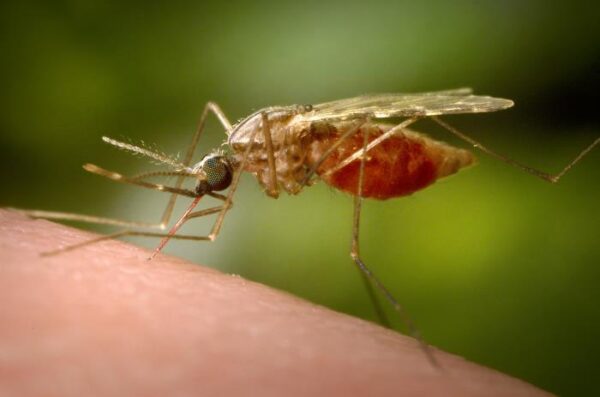 The scope of the long-standing malaria problem is truly staggering, and recent ominous developments have made conventional malaria control even more challenging for Africa: the spread of parasite resistance to the most important antimalarial drug, the spread of insecticide resistance in the endemic major mosquito vectors that are largely rural in distribution, and the invasion into Africa of a non-endemic insecticide-resistant urban malaria vector species from Southeast Asia—a perfect storm.
However, there is cause for hope. Groundbreaking scientific advances have led to deployment of two malaria vaccines, new-generation bed nets, and the ongoing development of promising genetic methods targeting the mosquito vectors.
What’s the biggest misconception people have about mosquitoes?
Perhaps this: To the average person, one mosquito looks like another. Thus, it might be surprising that mosquitoes likely emerged in the Triassic >200 million years ago, and that they diversified into two lineages that split from each other in the early Jurassic approximately 180 million years ago. One of those lineages contains the anopheline mosquitoes that transmit malaria, and the other contains culicine mosquitoes, of which the Yellow Fever, Dengue, and Asian Tiger (Aedes) mosquitoes are infamous examples.
Latest Posts

Special Feature
October 14, 2026
The Hidden Chemistry Beneath Our Feet: Susan Brantley on the Role of Rocks in Our Everyday Lives

Special Feature
September 17, 2026
Beyond Calories: Jeffrey Gordon on How the Gut Microbiome Shapes Healthy Growth